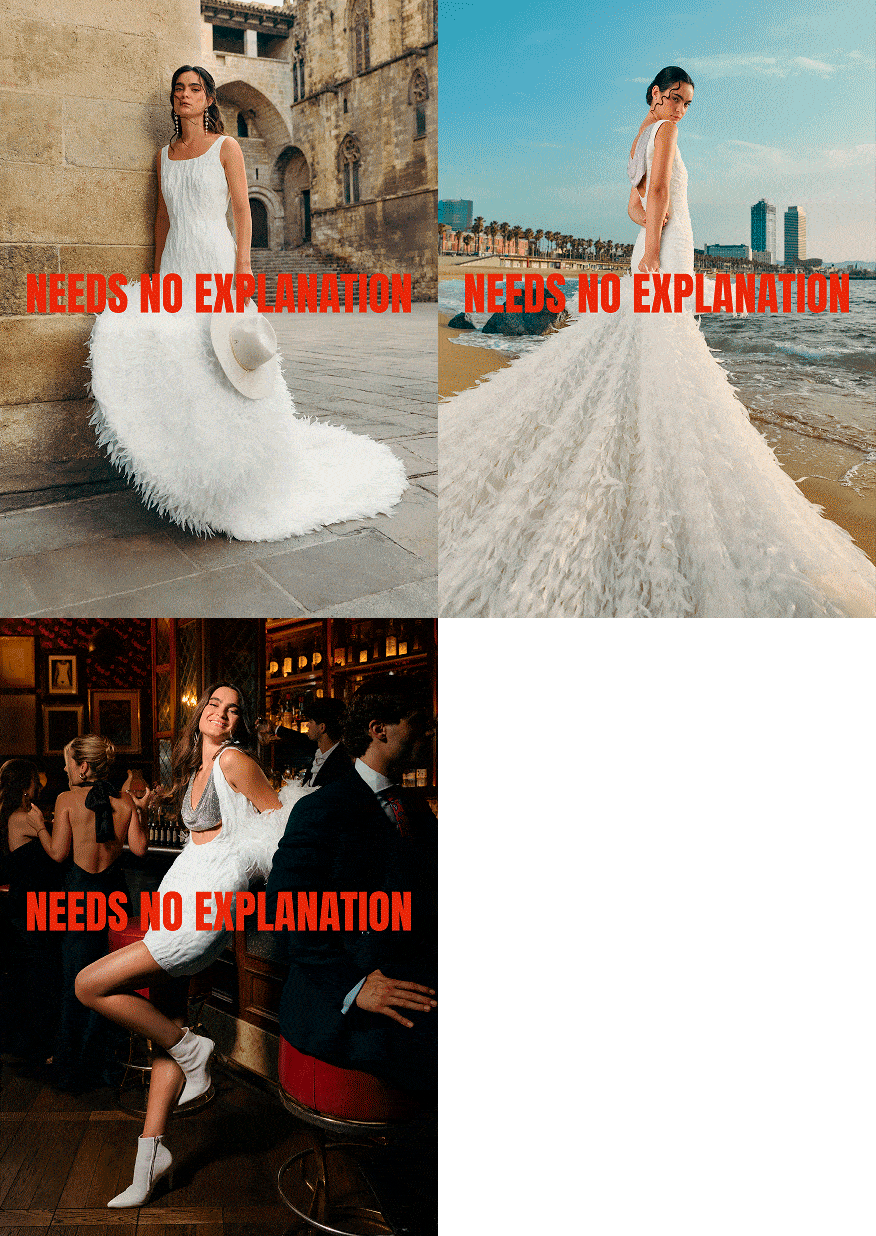

- Industry
Markets, product, pricing and retail: the forces shaping the sector.
Markets gaining momentum, trends travelling across borders, new sales dynamics and an increasingly flexible calendar. The bridal business is evolving, forcing brands and retailers to fine-tune their decisions: where to be, what to offer, at what price and who to grow with.
At Barcelona Bridal Fashion Week, we take a closer look at seven key factors that help make sense of the sector today and where it is heading. Joining us on this journey is Yolanda Pérez, Creative Director at Yolancris, a Catalan bridal brand with an international presence. Her experience brings the perspective of a brand closely connected to the show and with first-hand knowledge of the challenges involved in growing and competing in the global market.

1. Expanding internationally is one thing — but where?
Going international is about more than simply adding countries to the map. Demand, the critical mass of bridal boutiques, import costs, the sales model and having the right local partner all determine whether a market offers genuine potential for a brand. One market to watch? Asia, an emerging market that we at BBFW are seeing gain significant momentum. While the international landscape continues to evolve, one rule remains unchanged: “A brand goes where there is demand,” says Albasarí Caro, Director of Barcelona Bridal Fashion Week.
In a market with a broad range of brands, the challenge is also finding the right customer. Yolanda Pérez sees this first-hand in her role at Yolancris. Compared with the period before the pandemic, she sees a shift: “It’s becoming increasingly interesting to be able to choose both the brand and the customer at the same time.” This mutual selection creates the foundations for more genuine and reciprocal business relationships.
International growth is not about being everywhere; it is about finding the markets and customers where there is a genuine business opportunity.
2. A global bride, but a market that remains local
Instagram, TikTok and Pinterest have blurred borders, allowing a bride in Barcelona, Seoul or New York to access the same references and sources of inspiration. That does not mean the same dress will perform equally well everywhere. Every market retains its own particularities, making the buyer a key figure in understanding them: they know their customer, her preferences and which styles have the greatest potential in their boutique.
For brands, the challenge is to strike the right balance between a recognisable identity and a collection that can connect with different realities. At BBFW, we see two approaches: either have a very clear understanding of the audience the brand is targeting, or build a collection with enough variety for each buyer to find the pieces that best fit their market.
Inspiration travels across borders; demand still has a local accent.
Inspiration travels across borders; demand still has a local accent.
Distribution also shapes brand perception.
3. Not every store is right for every brand
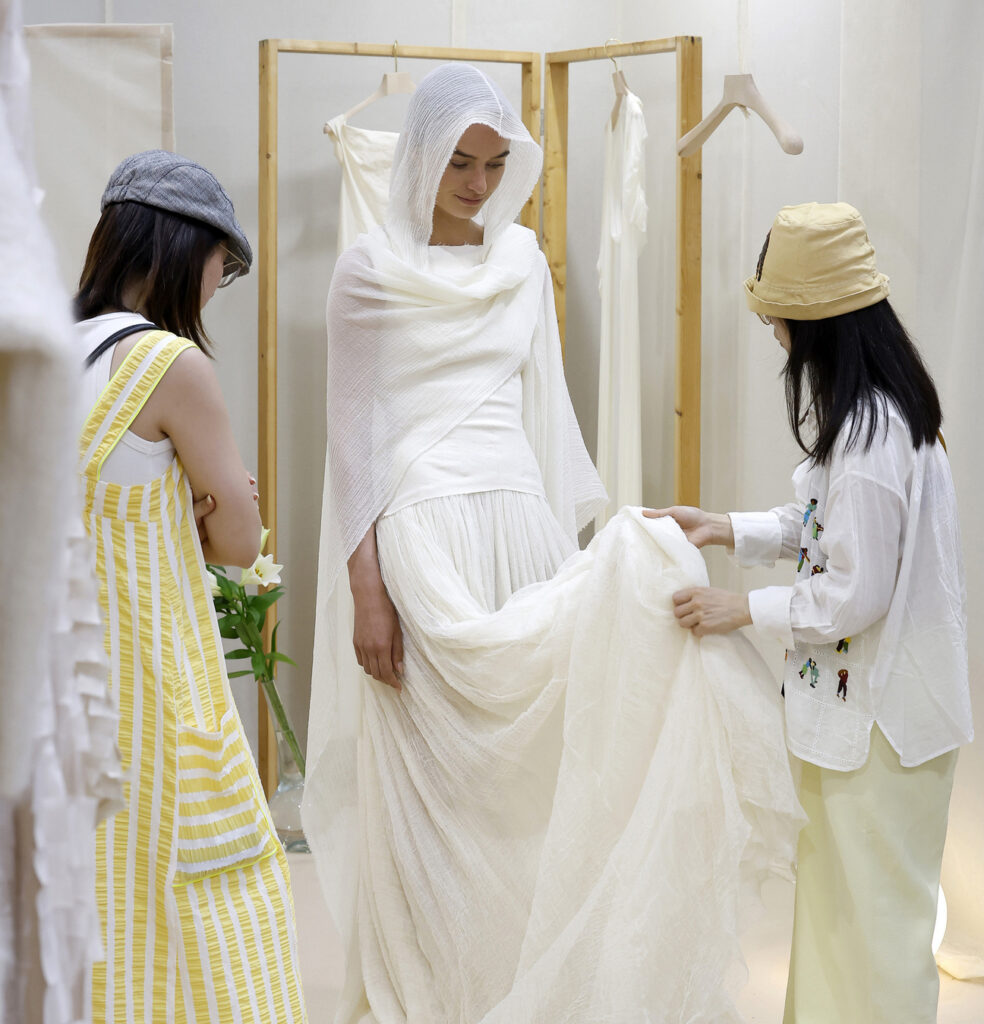
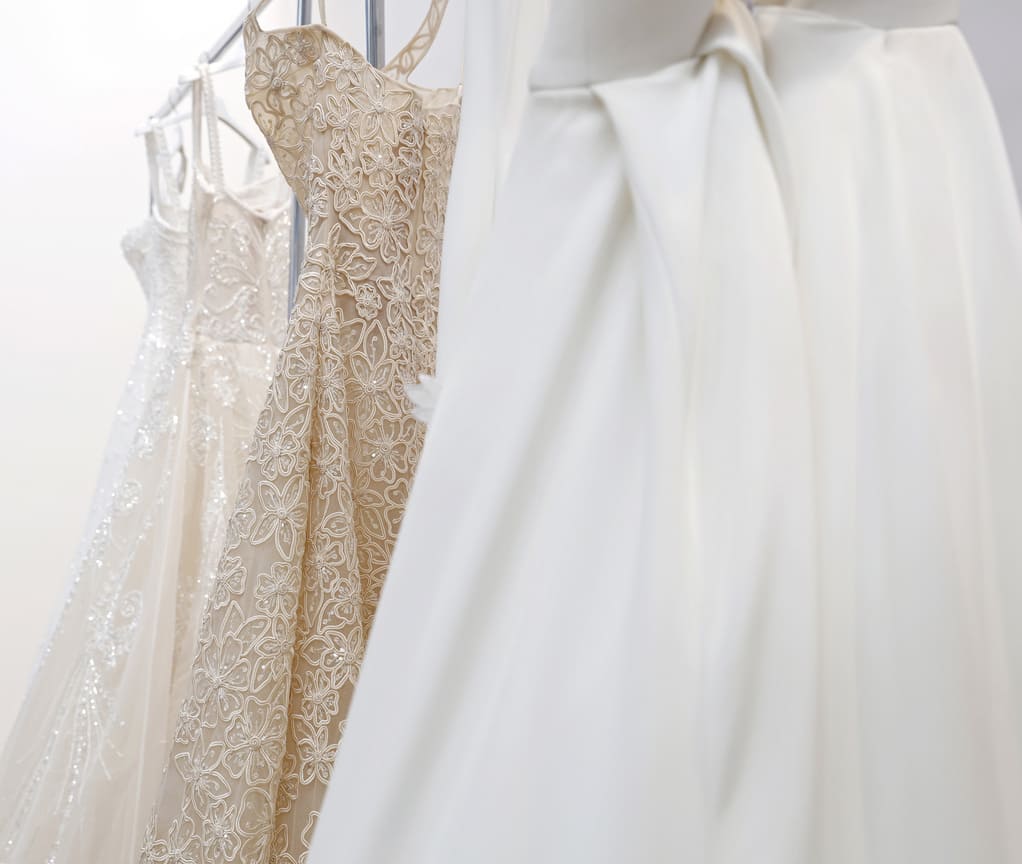
Securing a new retail account is not enough: where and how a brand is sold matters too. Price, positioning, customer profile and brand selection need to be broadly aligned. The right buyer understands their market, knows how to buy and attracts the type of bride the brand wants to reach. And there is another factor that is harder to quantify, but equally important: how the product is presented and represented in the boutique. Distribution also shapes brand perception.
Yolanda Pérez also highlights the need for differentiation within the multi-brand retail channel. These boutiques, she explains, have traditionally built their appeal around offering customers products they cannot find elsewhere, and today she sees a constant search for distinctive product. In a market with a broad range of brands, brand selection also becomes a positioning tool for the boutique itself.
Choosing where to sell is also choosing how you want your brand to be perceived.
4. Price matters
In a market with a broad range of options, price inevitably becomes part of the equation. At BBFW, we are seeing widespread price sensitivity, a reality that Yolanda Pérez also acknowledges: “Budgets are becoming increasingly defined.” For brands, this makes it essential to understand exactly where their product sits in the market and what value it delivers at each price point.
Price does not operate in isolation. A brand’s reputation, positioning and perceived value also influence how much a bride is willing to spend. A recognised brand can command its price more effectively while also becoming a draw for the boutique. Building brand equity therefore has a commercial dimension too.
Price matters, but so do the reasons why a bride is willing to pay it.
Yolanda Pérez, Creative Director at Yolancris: “At certain price points, the service has to be exceptional because it is part of the buying experience.”
5. A good product is no longer enough
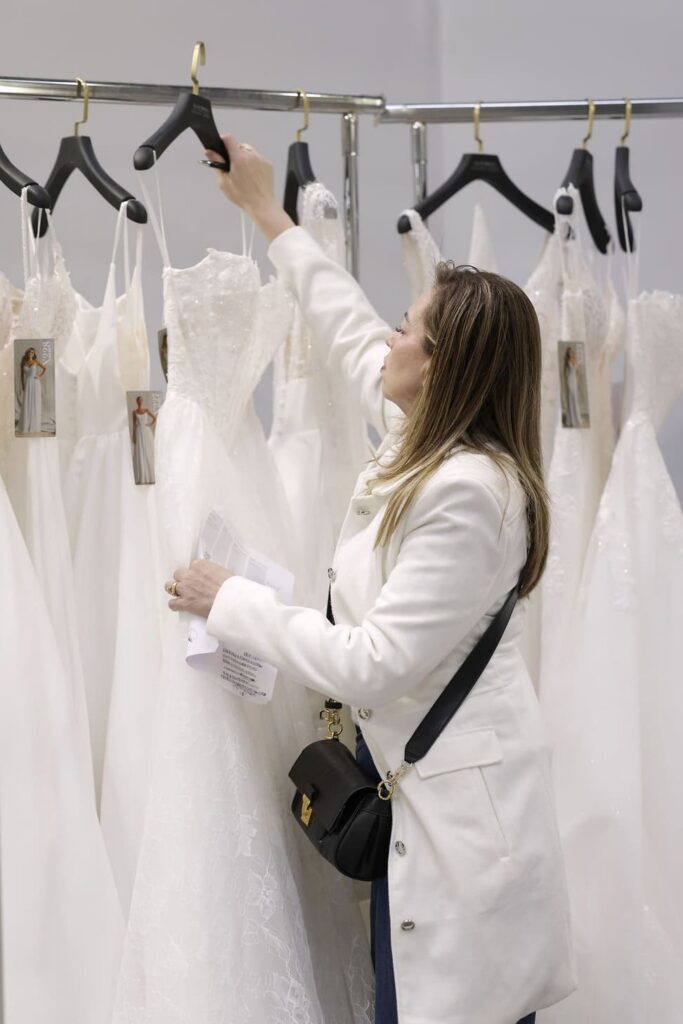
The wedding dress remains at the heart of the business, but the product no longer travels alone. Retailers also need brands to help them sell: strong collection imagery, engaging social media content, a story they can communicate to their customers and a service team that responds when needed.
Technology adds another layer to these tools. Drawing on her experience at Yolancris, the Creative Director particularly highlights the value of virtual systems and tools in supporting sales. In a market with a wide range of options, making the sales process easier and giving retailers the resources they need are also part of a brand’s value proposition.
A strong collection opens the door; giving retailers the tools to sell it helps keep that door open.
6. The season is getting longer
The bridal calendar has become less rigid. Weddings are spread across more months of the year, creating more sales opportunities for brands and boutiques. The calendar itself reflects this evolution. For Pérez, weddings can take place practically “any day of the year, any day of the month”, although she acknowledges that “brides will always love flowers and sunshine”. Seasonality, therefore, is not disappearing: spring and summer still carry significant weight. For the business, however, the shift means looking beyond the traditional season and being ready to respond to demand that is becoming less concentrated.
The season is not disappearing; it is becoming more fluid. The bridal business is increasingly spreading across the year.
7. Selling the dress is only the beginning
The relationship between a brand and a boutique does not end when the order is placed. Meeting agreed deadlines, responding quickly and offering flexibility — including in dress customization — are all part of the service that supports the product. Building buyer loyalty means nurturing that relationship every day
.
Service is precisely another of the factors Yolancris’s Creative Director considers crucial to building loyalty. Retaining customers is becoming more challenging and, as a result, brands need to be ready to respond when customers need them. The same expectation extends to the bride: “At certain price points, the service has to be exceptional because it is part of the buying experience.”
Product, service and the ability to adapt therefore build a relationship that goes far beyond a single sale.
The sale secures an order; service builds a relationship.