
- Trends
From low waists to the second look: how today’s bride is changing
The new bride is already here, moving by her own rules. On the Barcelona Bridal Fashion Week runway, we saw that every woman can find a dress that reflects her personality, yet a shared direction is also clear: bridal fashion is evolving toward freer, more versatile, more personal designs, where comfort coexists with aesthetic emotion without sacrificing the sense of fantasy the occasion deserves.
And this evolution does not necessarily lead to flawless minimalism. Quite the opposite: the bride still wants to feel like a bride. She seeks fashion, identity, and that special impact that turns a dress into a memory. Moreover, today’s major fashion trends increasingly influence her final choice.
Renewed corsets, low waists, 3D florals, reimagined veils, and transformable dresses draw a new bridal map—more open and global than ever. Here are the 8 trends that will define 2027.
1. Renewed corsetry
Structured bodices are back, but far from the rigidity of the past. Influenced by a new romantic aesthetic, modern corsetry redefines the silhouette through lightness, comfort, and construction that respects movement. Designers are using flexible interiors, soft fabrics, and patterns that flatter without constriction. In many collections, the corset even appears as an outer or detachable element, closer to styling than obligation. As Yolancris’ creative director, Yolanda Pérez, explains: “I don’t want to condition a woman to feel she has to wear a corset.”
2. Skirts with volume and movement
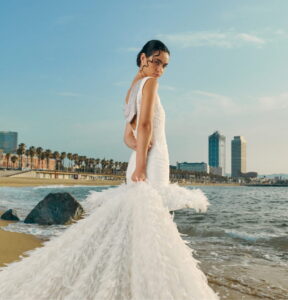
The 2027 bride wants to walk, dance, and enjoy every moment. That’s why one of the season’s major directions splits into two clear paths. On one hand, fluid skirts, layers of light tulle, and silhouettes that accompany the body without heaviness are thriving, with trains becoming ever lighter and more ethereal. On the other hand, more theatrical proposals emerge, with marked volumes and a heightened sense of presence. Many brands soften traditional rigidity to prioritise comfort without giving up visual impact.
At Immaclé, this idea is expressed through silks and chiffons that drape naturally around the body. As founder and creative director Imma Rodríguez explains: “The proposal starts from an idea of freedom and movement, where the bride is conceived as a figure in transit, free of ties and in constant transformation.” Ankle-length versions also appear, revealing the bridal shoe.
Imma Rodríguez, founder and creative director of Immaclé: “The new bride is conceived as a figure in transit, free from constraints.”
3. Low waists
One of the most repeated and talked-about silhouettes of the season. The waistline drops towards the hip, visually lengthening the torso and creating a more streamlined, sophisticated effect. Compared to the classic natural waist, this line introduces freshness and a modern air, aligned with prêt-à-porter trends now adapted to bridal fashion. It also allows the skirt to carry more volume and opens new proportions within the dress.
4. Flowers everywhere
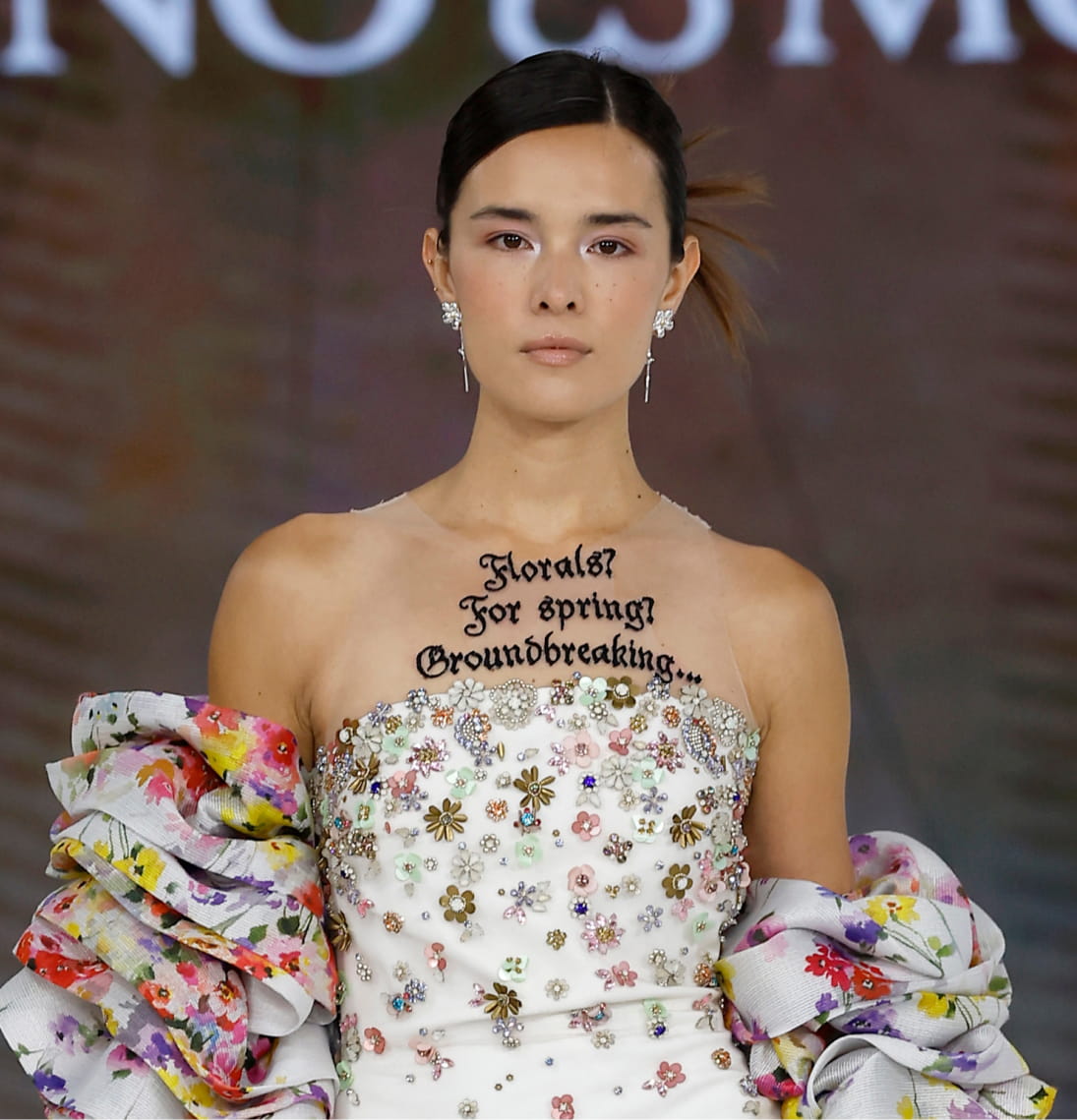
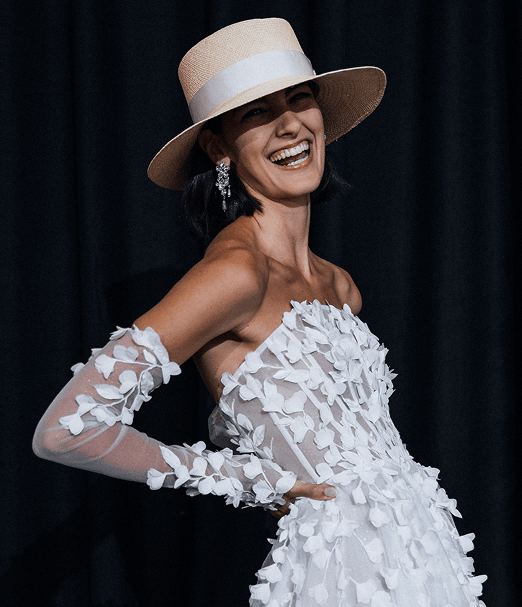
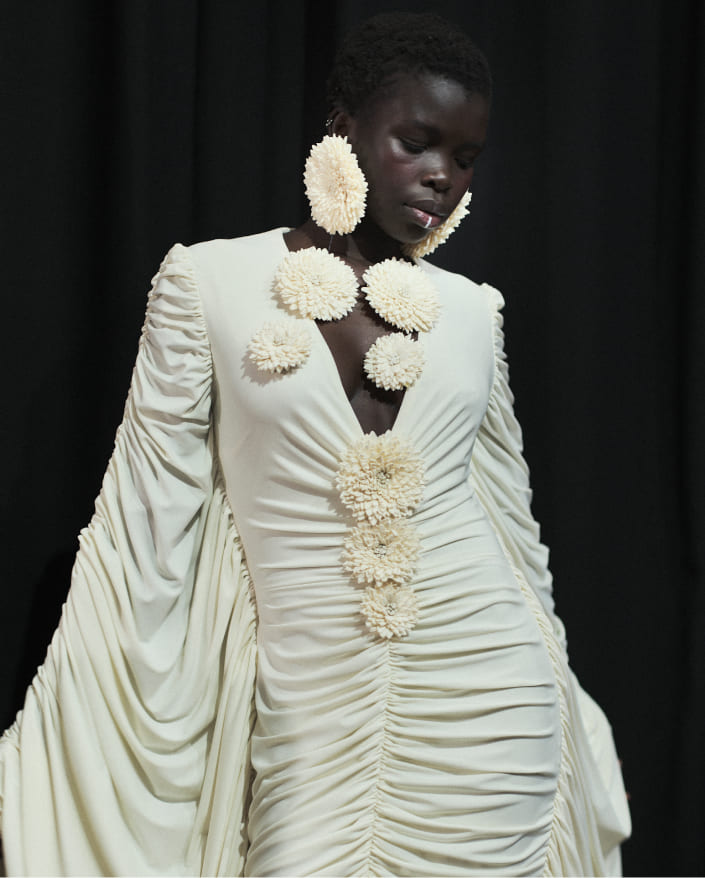
Flowers establish themselves as one of the strongest visual languages of the season, appearing in versions that range from bold to subtle. They are seen in large-scale applications acting as focal points, but also hand-painted—as in Isabel Sanchís—adding artisanal finishes that turn each design into a unique piece. Other brands, such as Mariano Moreno, reinterpret them in theatrical and colourful ways. Organic, embroidered, printed, or lace-integrated botanical florals also appear. As Yolancris’ creative director Yolanda Pérez reminds us: “I’ve always loved lace. It has a strong sense of nature because it’s all flowers.”
Yolanda Pérez, creative director of Yolancris: “I don’t want to condition a woman to feel she has to wear a corset.”
5. Two looks in one
Versatility is now essential in the bridal universe. Many brides no longer buy a single dress: they want several looks for different moments of the celebration or designs that can transform throughout the day. Overskirts, detachable sleeves, removable bodices, detachable trains, strategic double layers, and overlay pieces make it possible to move from ceremony to party with ease.
Brides want a more solemn image for the “I do,” a lighter one for dancing, and in many cases, a specific outfit for the pre-wedding or civil ceremony. As Marco&María confirms: “Many clients look for one dress for the wedding and another for the party. New luxury also means adapting to each moment,” explains co-founder María Díaz.
6. Beyond the traditional veil
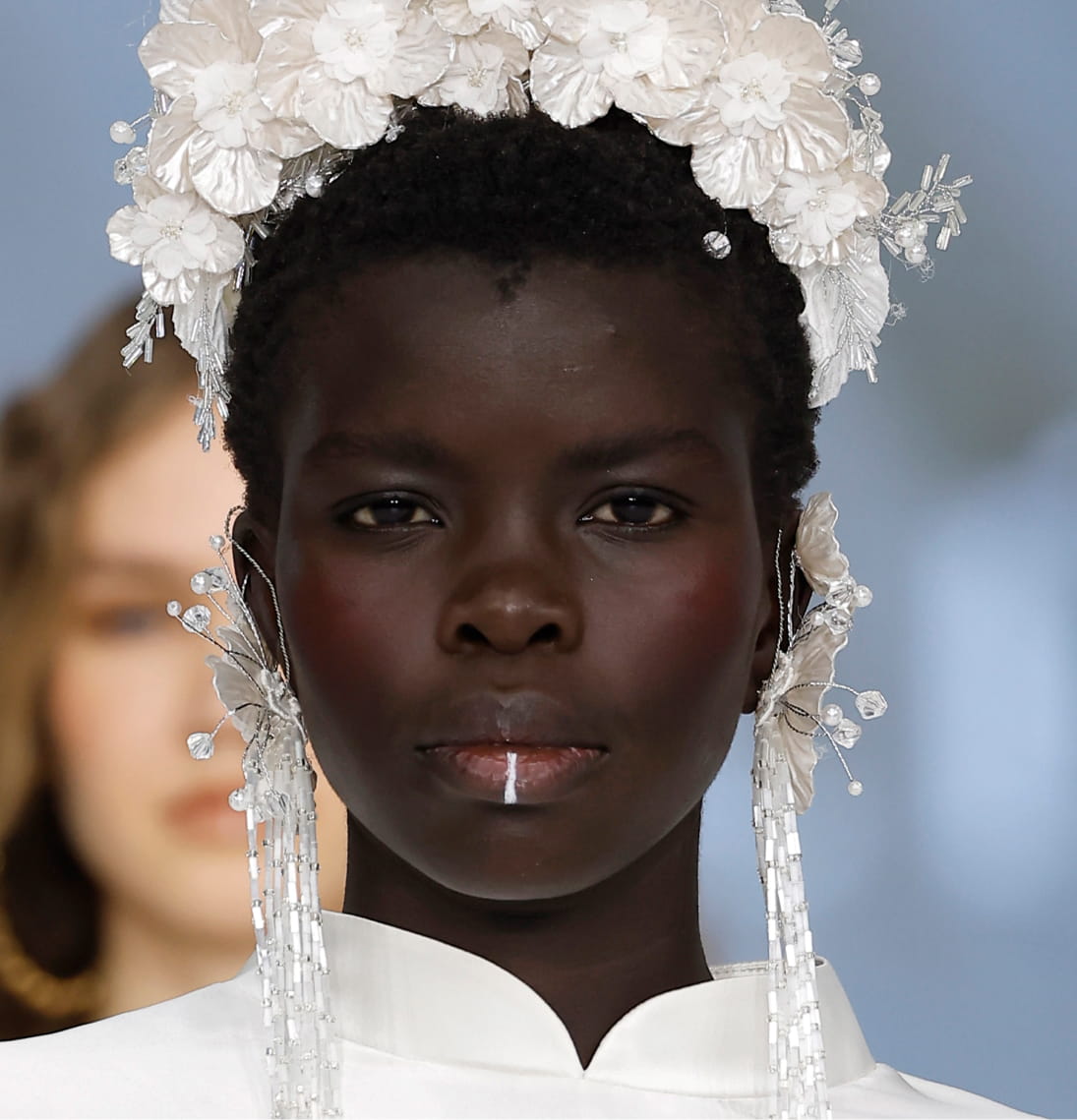
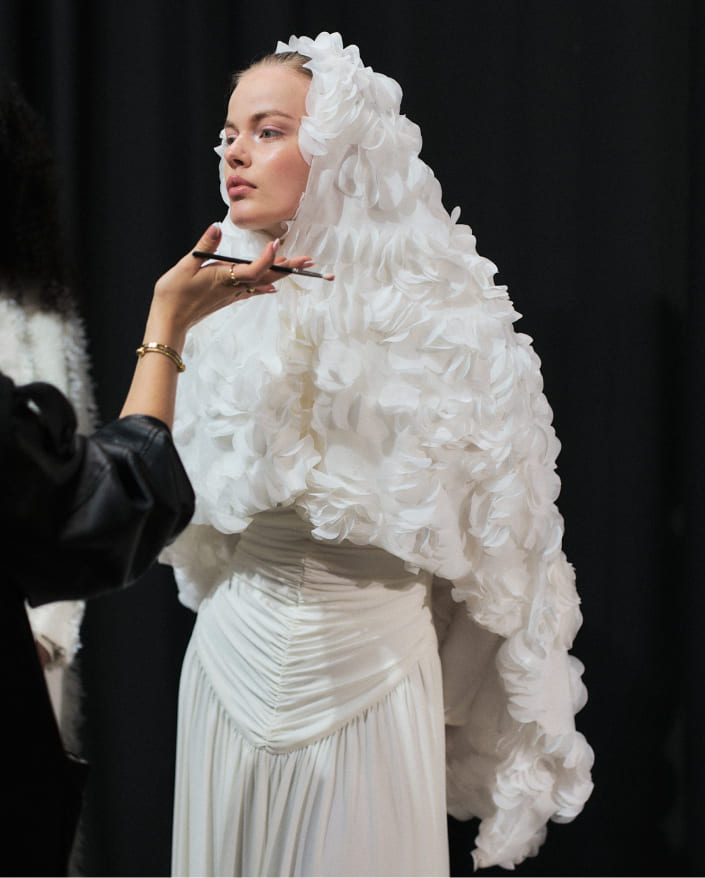
The bridal universe expands its codes, proving that accessories can completely transform a bridal look. The veil remains prominent—appearing in different lengths and styles (embroidered, minimalist, voluminous or dramatically draped)—but increasingly coexists with alternatives of strong aesthetic presence. Airy capes, fantasy hats, rustic-inspired pieces, reimagined caps, and the return of the pillbox hat from the fashion archives open new possibilities.
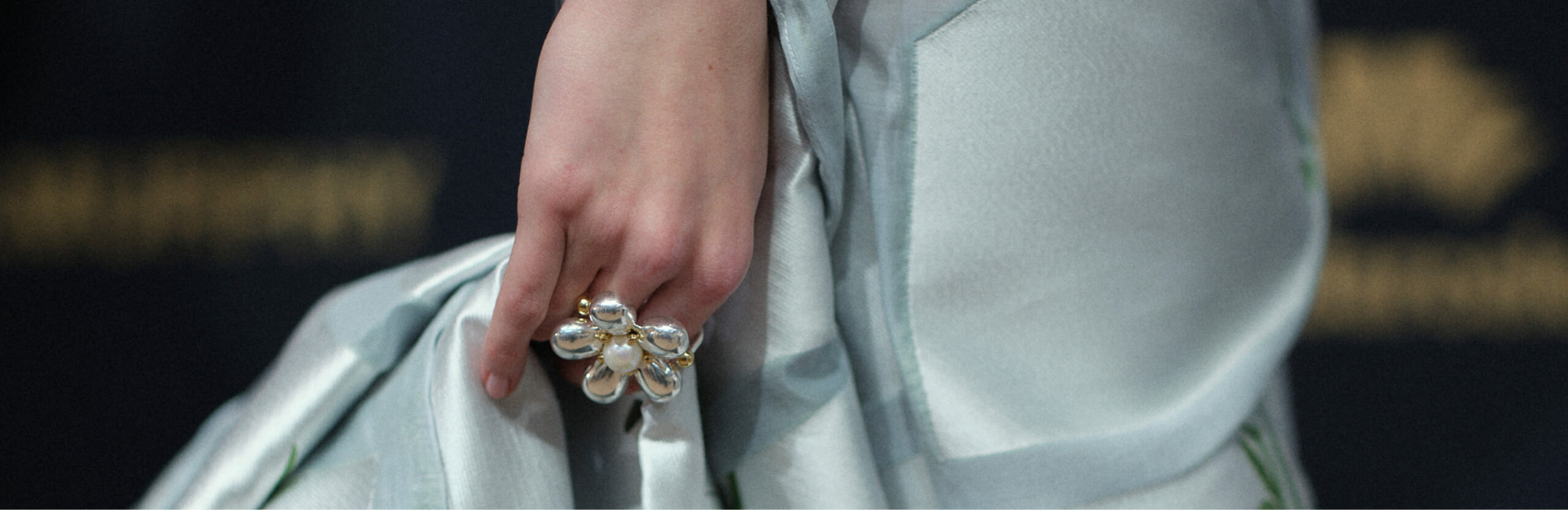
Floral mantles, jewel headpieces, and gold crowns—almost sacred in inspiration—also appear, as seen at Marco&María. Some proposals adopt vintage references, while others look to contemporary prêt-à-porter. Accessories cease to be secondary and become statements of personal style.
7. The unexpected garment: the blazer
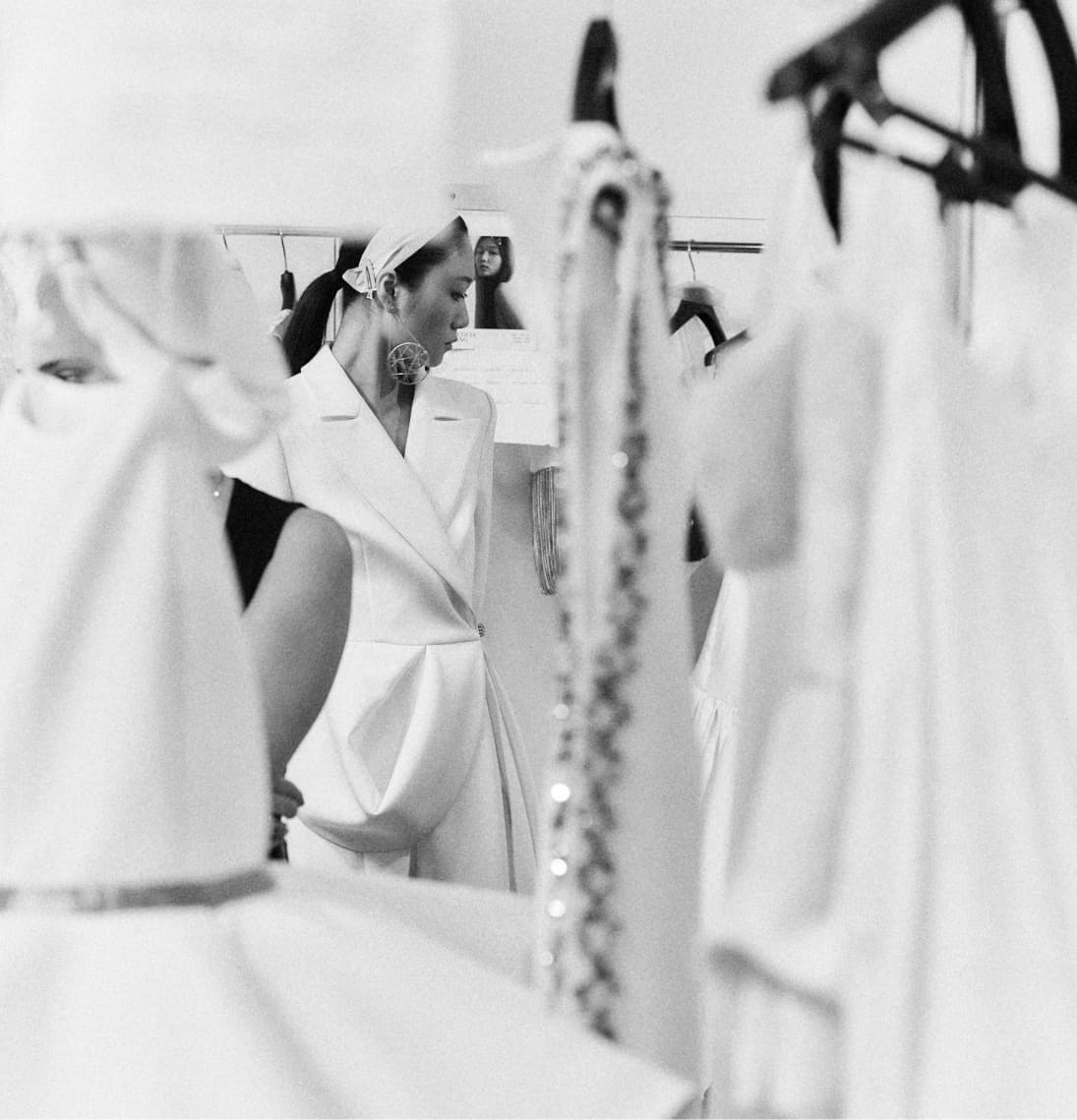
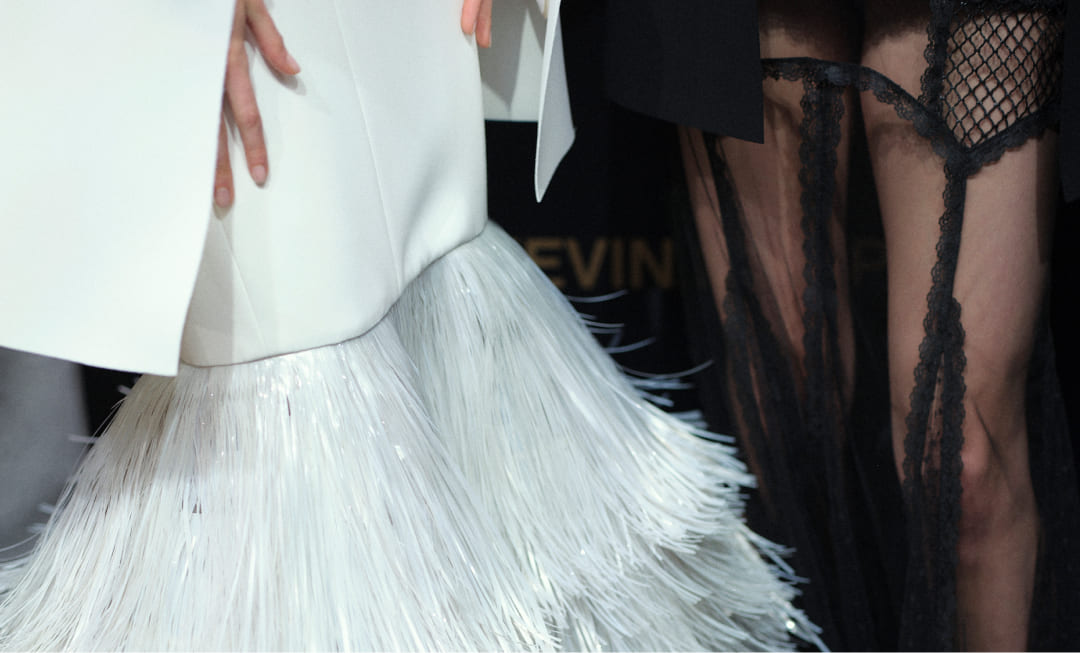
There are garments traditionally unrelated to bridalwear that are beginning to gain prominence, and one of the most interesting is the blazer. It has appeared accompanying dresses in collections by Isabel Sanchís and Yolancris, confirming that tailoring also has a place in bridal fashion. In white, black or oversized versions, it adds a contemporary contrast and a trendy touch that updates any look.
It can work as a light outer layer, as a second piece for the party, or as the perfect alternative for civil weddings and urban celebrations. It also introduces a more relaxed, cosmopolitan attitude without losing sophistication. “The maxi blazer gives you an amazing touch,” says Yolancris’ Yolanda Pérez.
María Díaz, co-founder of Marco&María: “New luxury also means adapting to each moment.”
8. Beyond white
Pure white loses exclusivity in favour of a richer, more flattering palette. Warm ivories, nude tones, pale pinks and iridescent hues, soft vanillas, and even metallic glimmers gain prominence on the runway. These colours soften the overall look, enhance fabrics, and add personality while being more adaptable to different skin tones.
At Marco & María, this evolution is interpreted with a delicate, sophisticated approach, even introducing green undertones. “We incorporate different colours in each collection, always with a powdery touch,” the brand explains. Meanwhile, Stéphane Rolland—major figure of Barcelona Bridal Night—admit that champagne is one of his favourite tones for its serene elegance and vintage aura. Today’s bride still wears white if she wishes, but she is no longer limited to it.