
- Trends
From romantic fantasy to subtle cultural references: this is how the new bride is taking shape
These are the bridal trends unveiled on the Barcelona Bridal Fashion Week 2026 runway, the international showcase where next season’s wedding dress collections are presented every year.
Not everything on a runway reveals itself at first glance. Some trends announce themselves through the dress, while others emerge through a detail, an accessory, a color palette or an unexpected nod to cultural figures like Rosalía. From the most obvious to the most subtle, here are the 10 key takeaways from the Barcelona Bridal Fashion Week 2026 (BBFW26) runway that reveal what is truly defining bridal collections for 2027.
1. The return of romantic drama
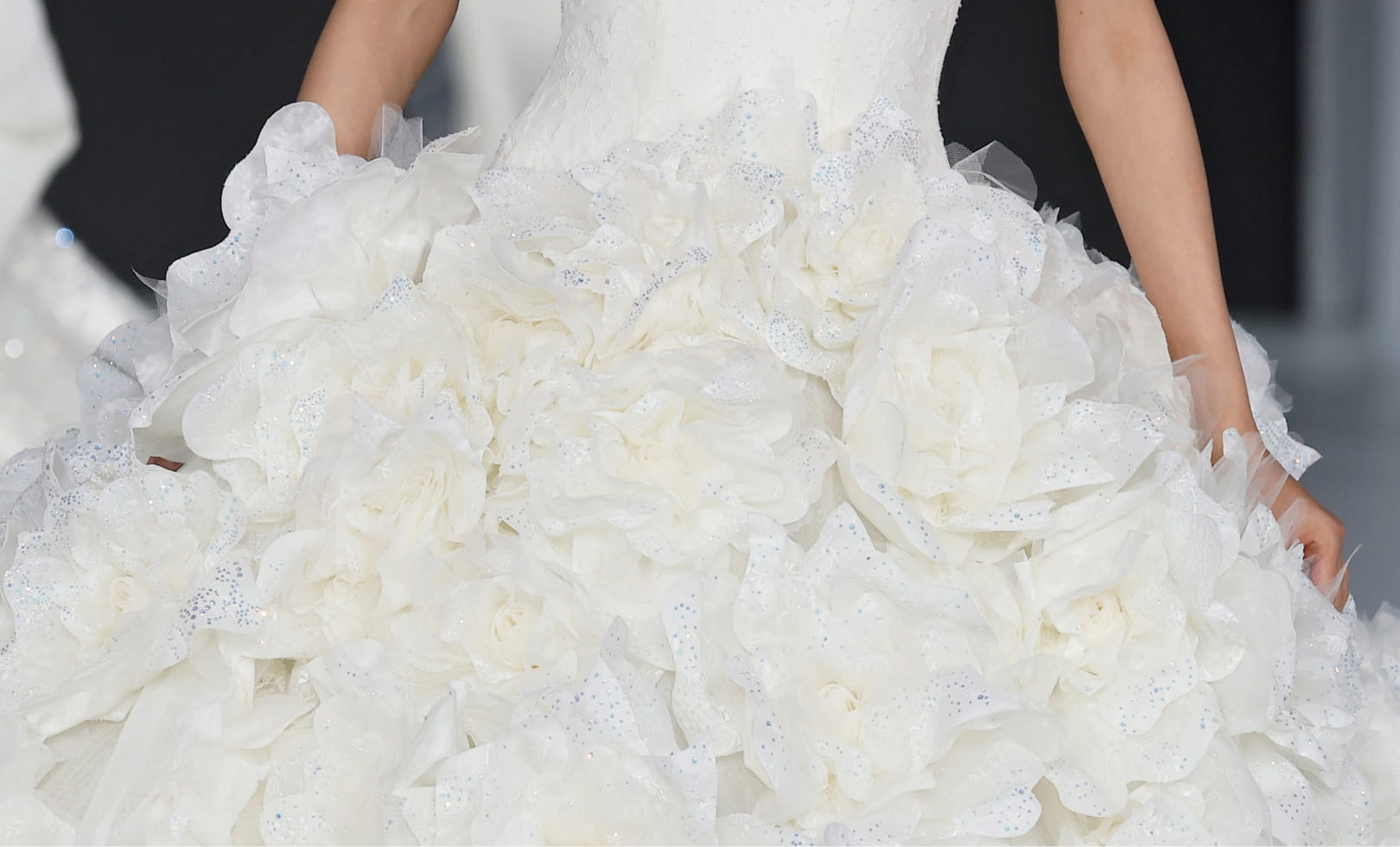
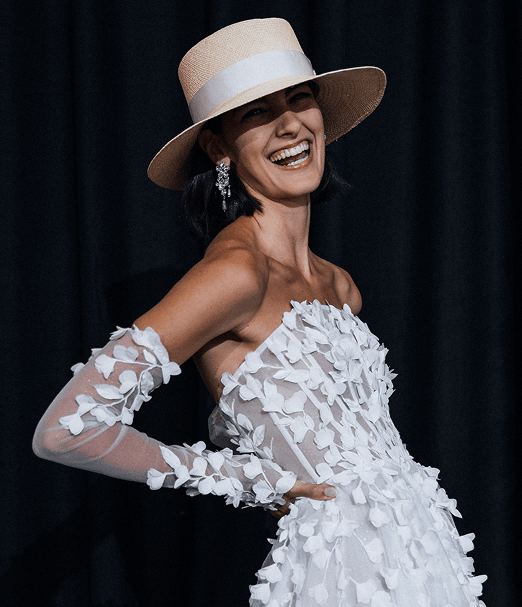
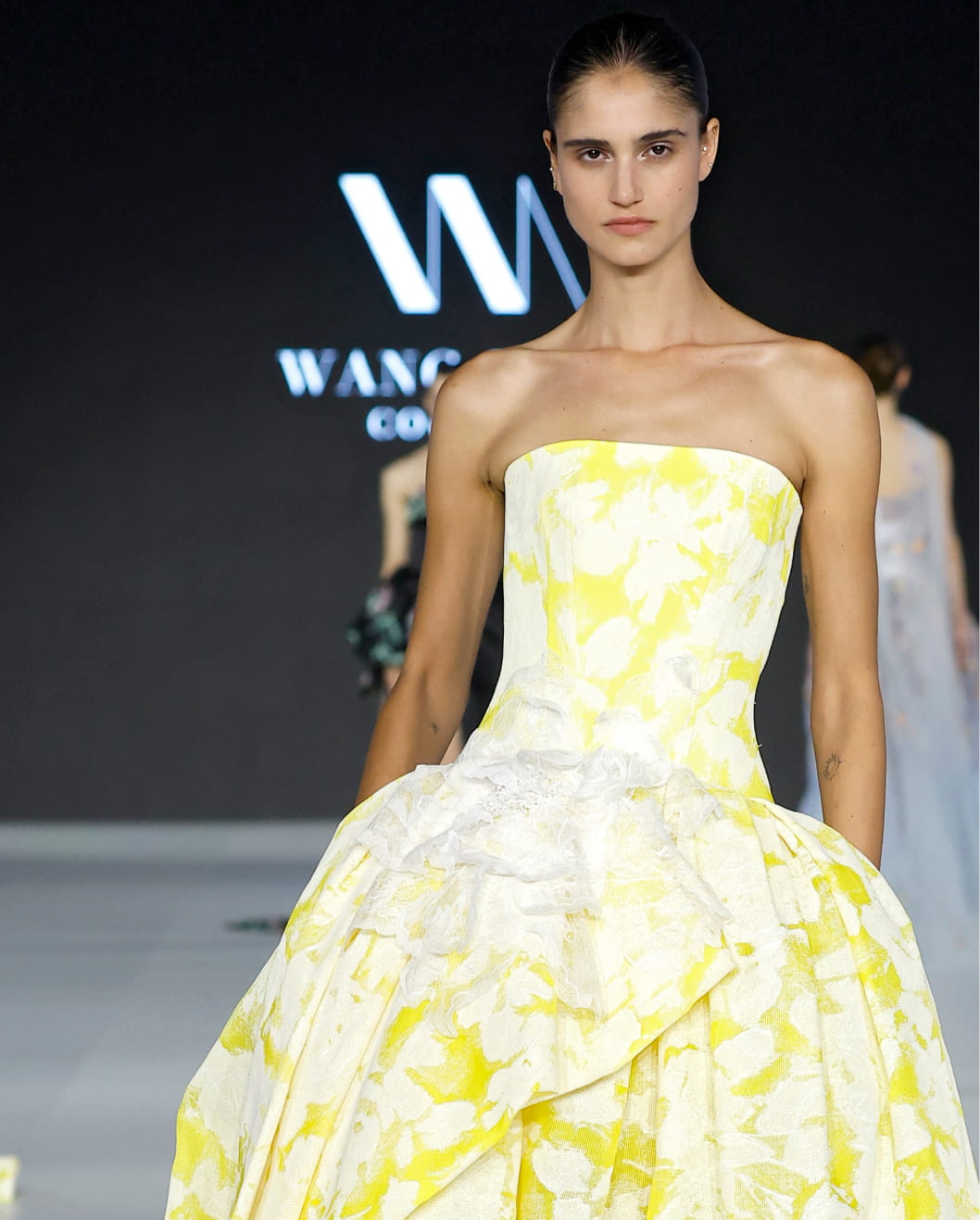
After years dominated by cleaner, more restrained bridal aesthetics, Barcelona Bridal Fashion Week 2026 (BBFW26) signals a shift in sensibility: romantic drama is back. The new bride embraces a more emotional and theatrical aesthetic, where visible corsetry — one of the season’s biggest protagonists — dramatic sleeves, voluminous skirts, ethereal fabrics and fairytale silhouettes bring fantasy back to the runway.
The references are diverse yet instantly recognizable: from the Bridgerton phenomenon to the dark romanticism of Wuthering Heights, passing through dreamlike imaginaries and aesthetics with almost anime-like echoes that have also made their way into bridal fashion, particularly through Asian designers. This is not a period bride or a historical costume fantasy, but rather a contemporary reinterpretation of the fairytale bride: more fashion-forward, more theatrical and far less timid when it comes to making an impact.
2. The hip becomes the new focal point
For years, the waistline was the central anchor of the wedding dress. Now, Barcelona Bridal Fashion Week 2026 (BBFW26) proposes a subtle shift in focus: the eye moves lower and the hip takes center stage.
Dropped waists, peplum silhouettes and new proportion play reshape the body through elongated, sophisticated structures infused with a retro spirit reinterpreted through a contemporary lens. The result completely transforms the perception of the silhouette and breaks away from traditional bridal proportions.
This is not simply about pattern cutting — it is a new way of redistributing volume, altering balance and giving prominence to an area that traditionally remained secondary.
Color is beginning to carve out its own narrative within the bridal universe.
3. Bohemian style gets a sophisticated update
This is not festival boho nor the hippie bride of a decade ago. The spirit remains, but it is expressed with a completely different intensity. Barcelona Bridal Fashion Week 2026 (BBFW26) revisits relaxed sensuality through a far more refined filter.
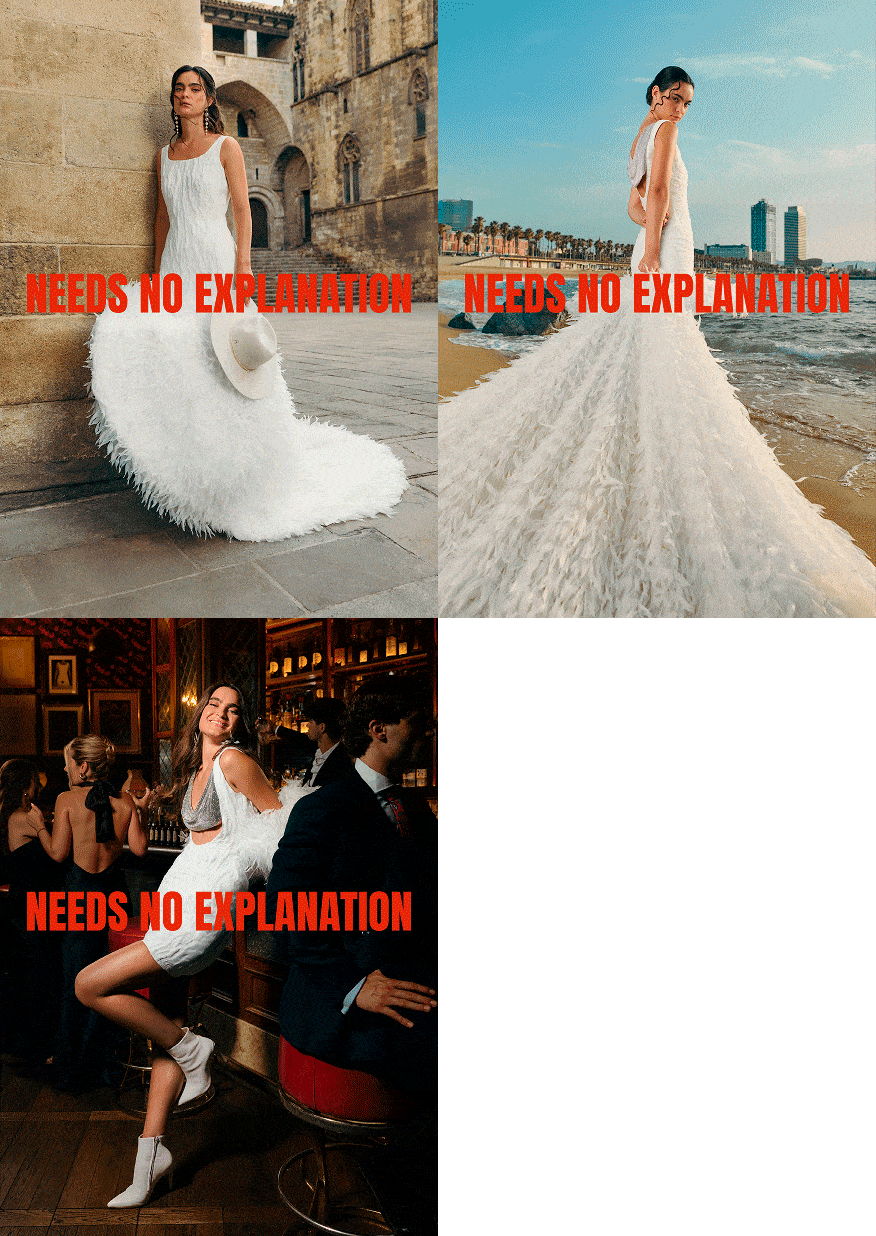
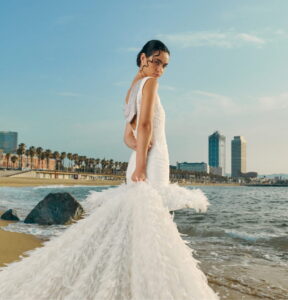
Lightweight gowns, bare shoulders, soft necklines, strategic feathers and silhouettes that seem to move effortlessly evoke the world of icons such as Brigitte Bardot and Jane Birkin, along with the carefree chic of the French Riviera.
There is something undeniably Cannes about this new bohemian bride, yet also something more fashion-conscious and less literal. A cleaner, more sensual and less predictable style that preserves its free-spirited essence without sacrificing sophistication.
4. The dress is built in layers
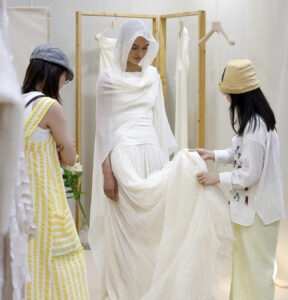
At Barcelona Bridal Fashion Week 2026 (BBFW26), the bridal gown is no longer meant to be understood at a single glance. Transparencies, layers of tulle, lace and silk, veiled textures and layered constructions create looks that reveal far more than they initially appear to.
Inner volumes, textures and second-skin effects add depth and visual richness, transforming seemingly simple dresses into far more complex and sophisticated creations. Some silhouettes shift with movement, fabrics float over one another, and an almost ethereal lightness conceals intricate construction work beneath the surface.
Layering — a concept inherited from street style, where the mix of lengths, textures and proportions has long redefined the way we dress — now enters the bridal universe, introducing a new way of building volume, movement and dimension.
The new bride is embracing fantasy once again, but no longer through costume — instead, through a far more fashion-forward and contemporary sensibility.
5. The bride steps into the street
Alongside the return of overt romanticism, another trend is increasingly resonating with fashion-conscious women: bridal fashion is looking to the street.
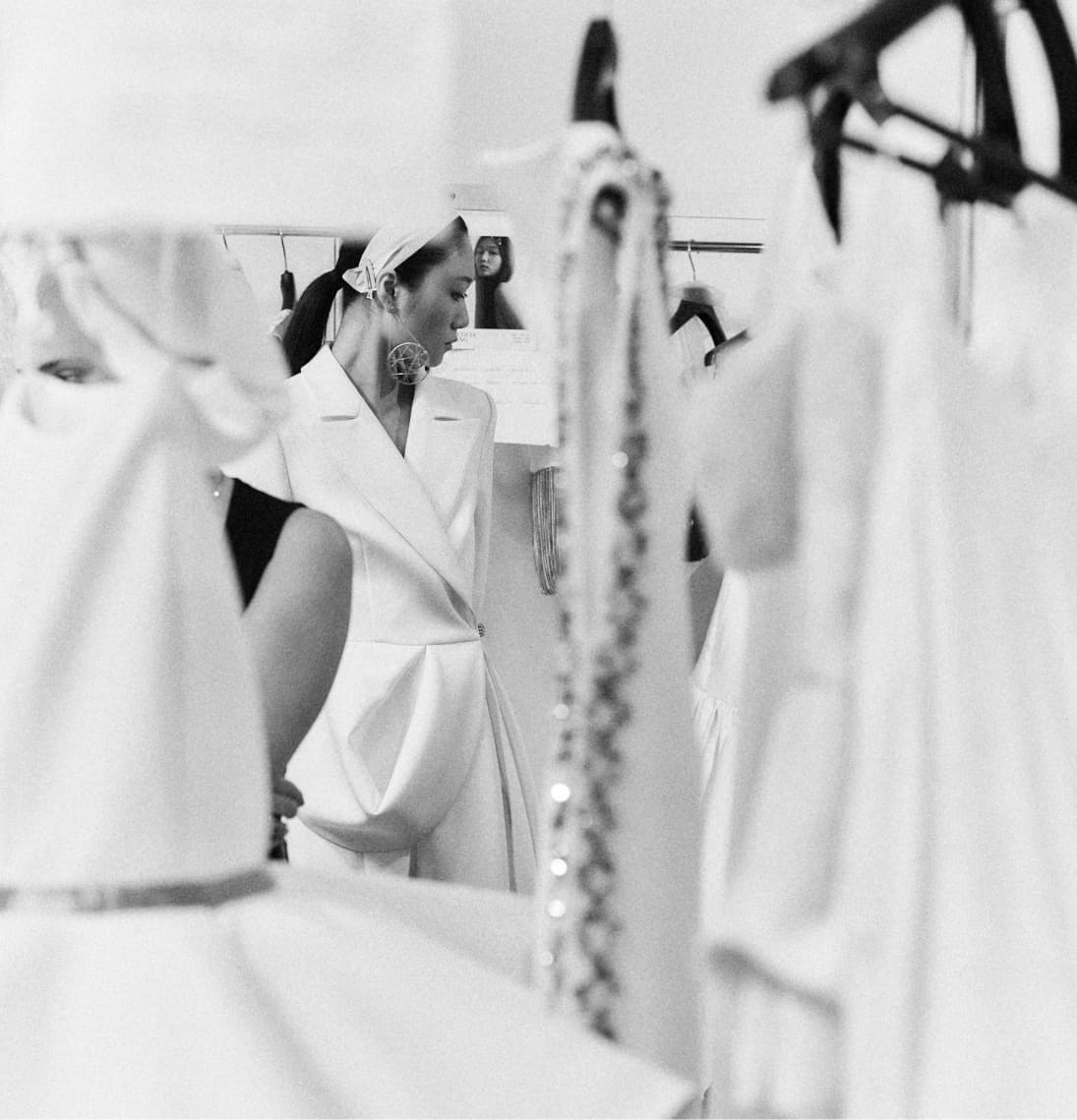
Brides are embracing codes that until recently seemed reserved for ready-to-wear and street style. Blazers worn over gowns, cowboy boots, side pockets, balloon silhouettes and an intentionally effortless attitude are redefining bridal dressing.
The wedding dress is no longer an isolated fashion category; it begins to dialogue with real-world fashion, incorporating pieces, shapes and details rooted in everyday style.
The result is a bride who feels less rigid, more contemporary and whose identity is shaped beyond traditional bridal conventions. A conversation between two worlds that, judging by Barcelona Bridal Fashion Week 2026 (BBFW26), has only just begun.
6. Accessories grow bolder and more expressive
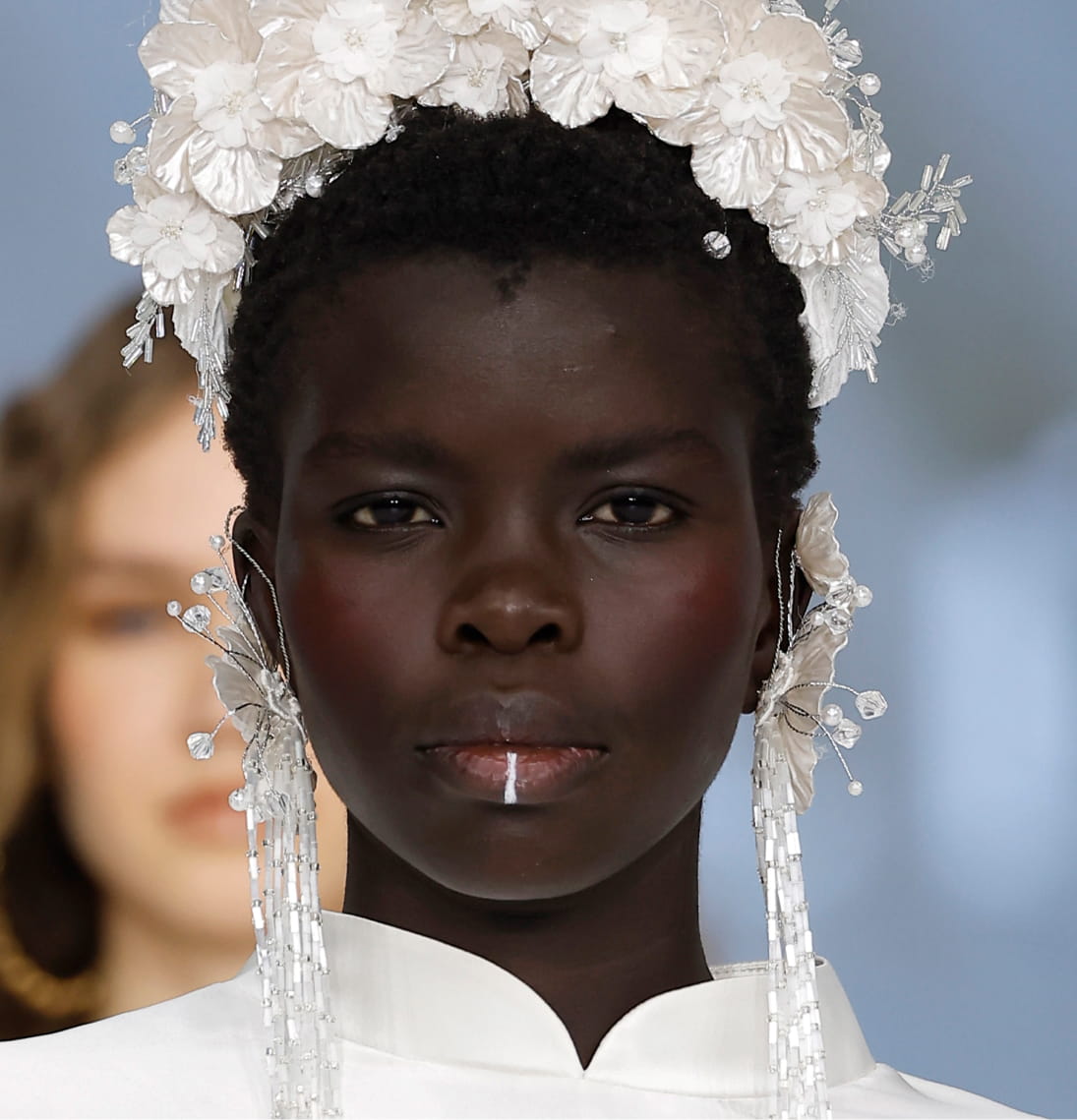
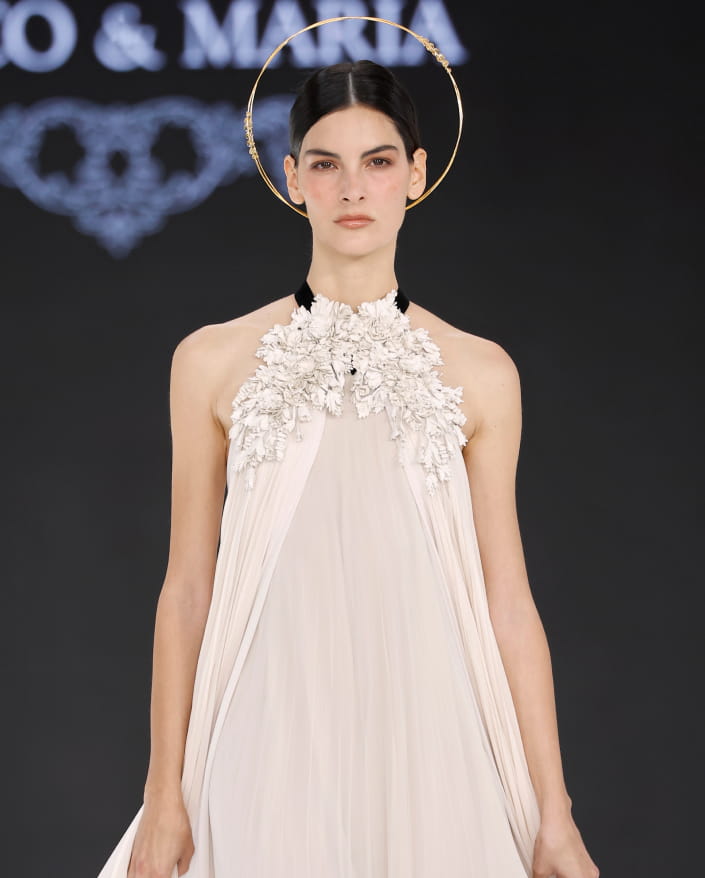
The head once again becomes a territory of style. Bridal fashion expands beyond the traditional veil, embracing hats, headpieces, tiaras, decorative flowers, face veils, masks and jewelry-inspired accessories with far greater intention.
Accessories are no longer there simply to complement the dress, but to construct a complete look from head to toe, turning the face and head into a new focal point while adding personality, drama or an unexpected sense of fantasy.
The gesture may be subtle, but the visual impact is not: the bride crowns herself once again — this time with far greater freedom.
7. Craftsmanship steps into the spotlight
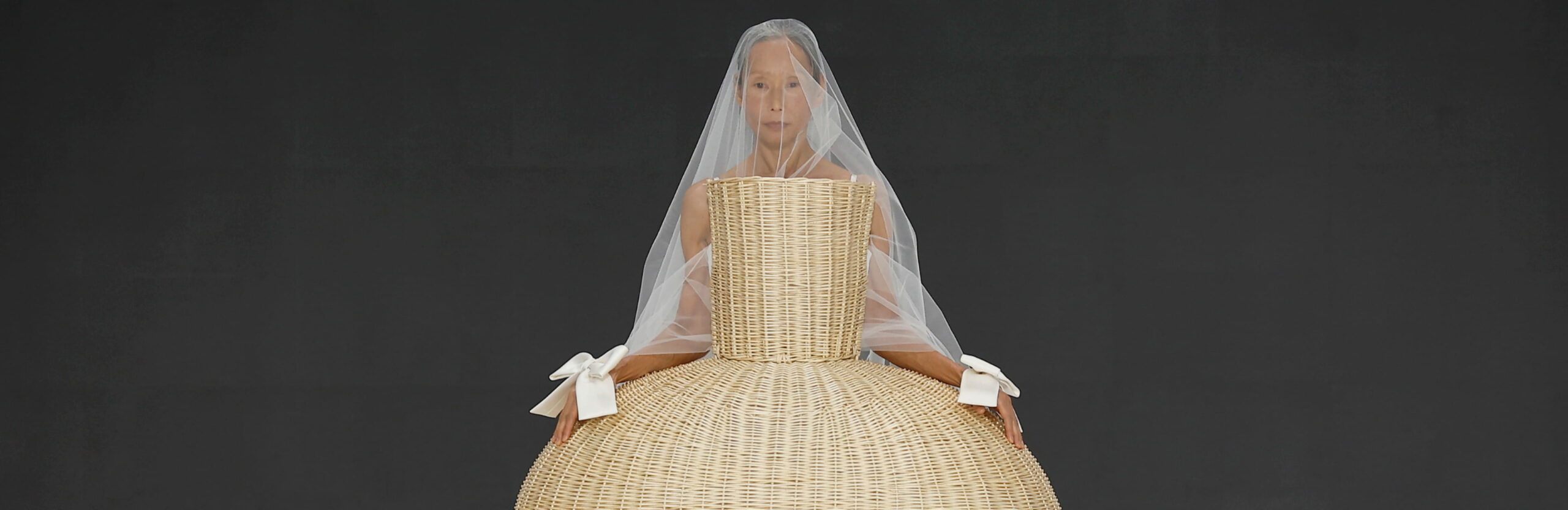
For years, craftsmanship functioned as one of bridal fashion’s quiet luxuries, hidden beneath the surface of the dress itself. Barcelona Bridal Fashion Week 2026 (BBFW26) reveals a clear shift in attitude: craftsmanship no longer merely supports the garment — it becomes part of the visual narrative.
Visible embroidery richly worked textures, almost sculptural pieces, handmade details and references to traditional crafts transform technique into an essential aesthetic statement.
One of the standout examples came from Candelas y Felipa, whose basket-inspired dress incorporated artisanal wickerwork into the collection, turning basket weaving itself into a fashion statement with a visible runway presence.
Craftsmanship is no longer an invisible detail: it claims centre stage, reminding us that behind every gown lies not only design, but also hands, time and savoir-faire.
8. Lace remains an eternal favourite
In bridal fashion, some fabrics evolve with trends while others simply never lose their relevance. Lace remains one of them.
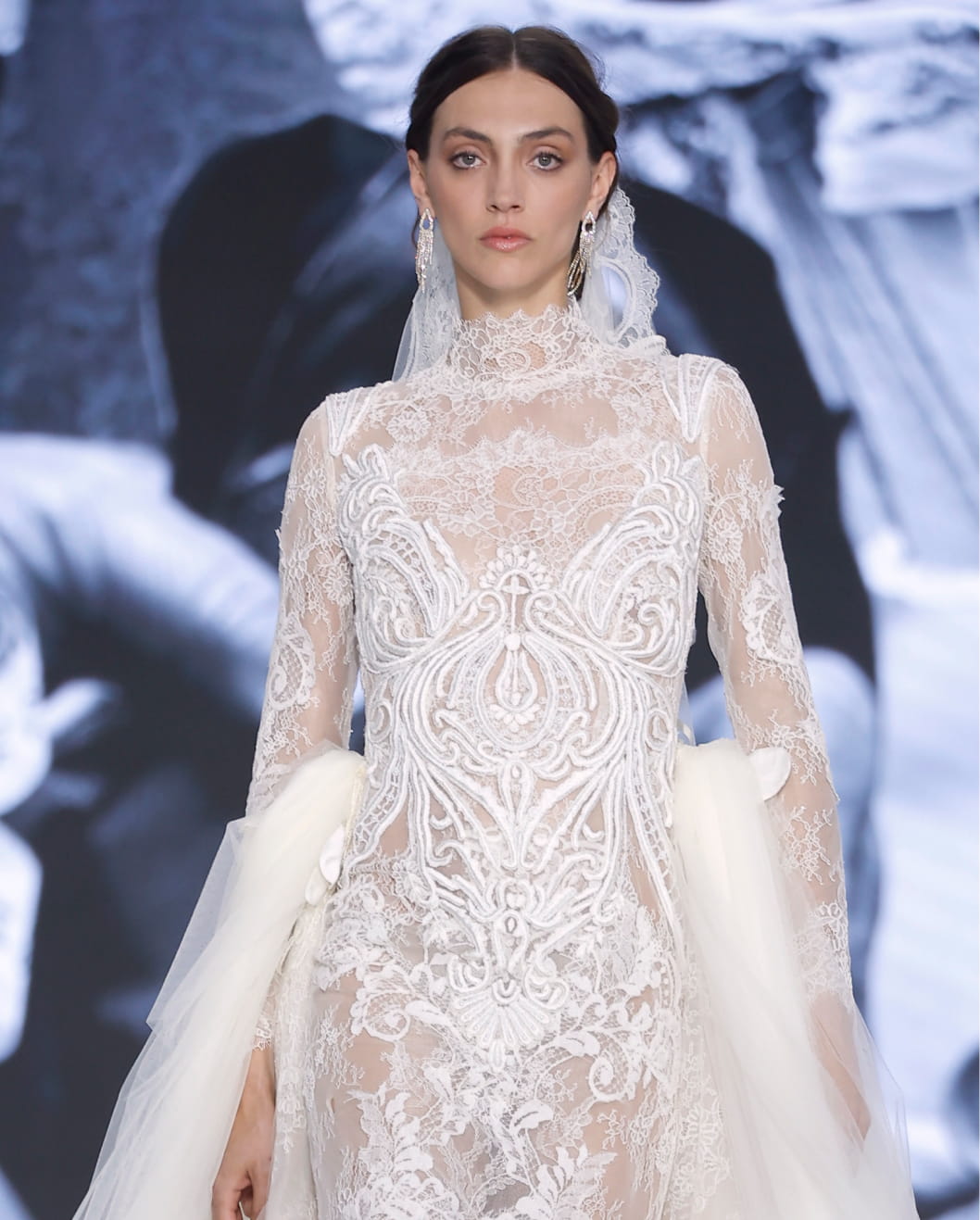
Barcelona Bridal Fashion Week 2026 (BBFW26) confirms that this timeless bridal classic retains all its seductive power while reinventing itself through new interpretations. Delicate romantic lace coexists with more graphic, modern and sensual approaches, proving once again that lace remains both timeless and versatile.
Floral lace, botanical embroidery, strategic transparencies and raised appliqués create gowns that subtly reveal the skin while introducing a more sophisticated sensuality.
In its boldest versions, lace even extends down to the legs, with visible lace stockings paired with short dresses — proof that this classic language still has much more to say.
9. Color loses its fear
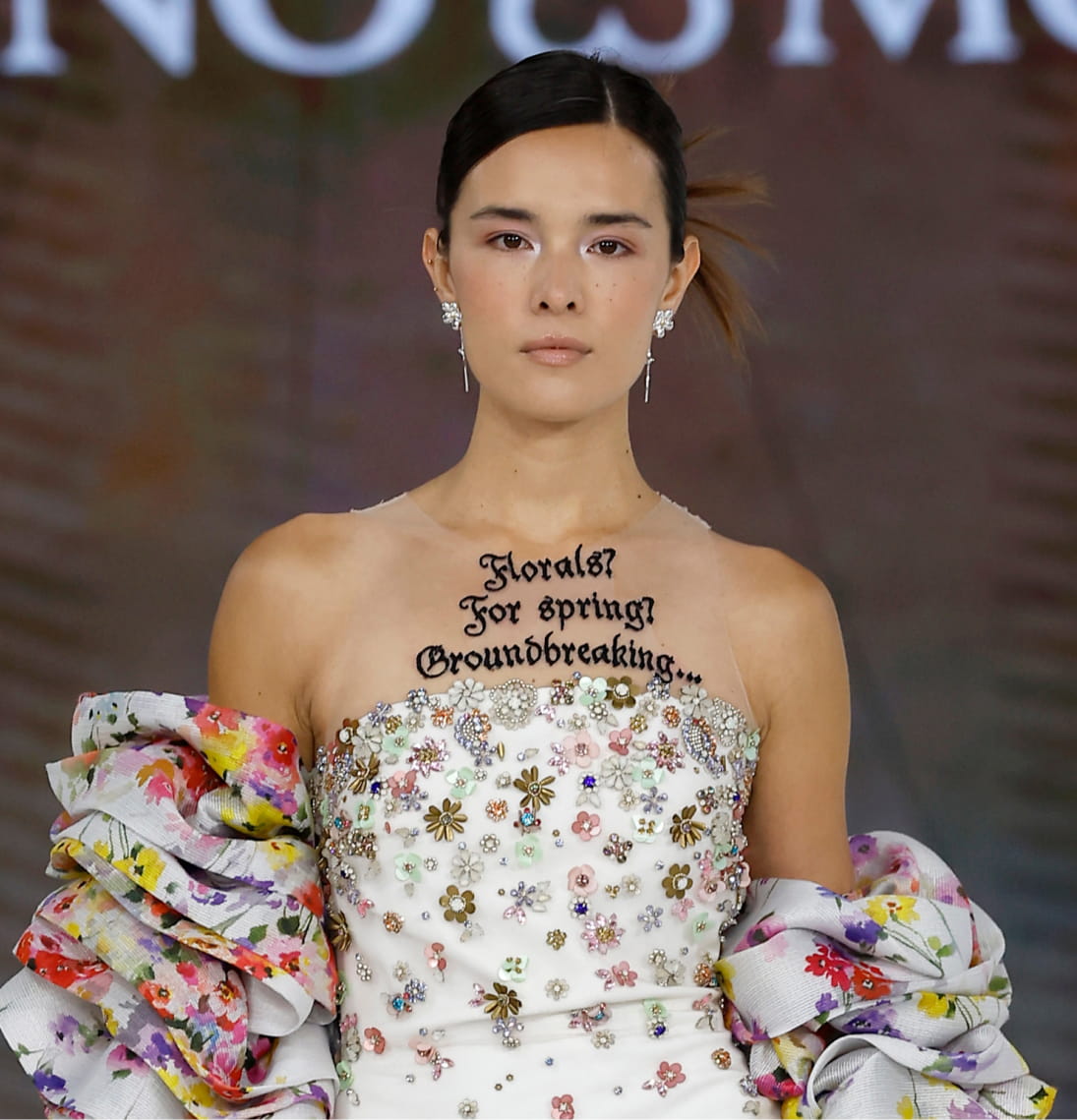
The bridal universe is slowly shedding its fear of color. Wedding dresses are increasingly opening to new palettes and exploring codes that move beyond tradition.
Pastel shades, misty hues, painted florals, chromatic embroidery and touches of blue, green, pink and violet bring a new freshness to bridal fashion.
Soft, powdery proposals — spanning beige, champagne and almost ethereal tones — coexist alongside far bolder visions where color becomes pure fantasy.
Color no longer appears merely as an anecdotal detail: it brings personality, challenges expectations and broadens the very definition of what a wedding dress can be today.
10. A pop spirituality enters the runway
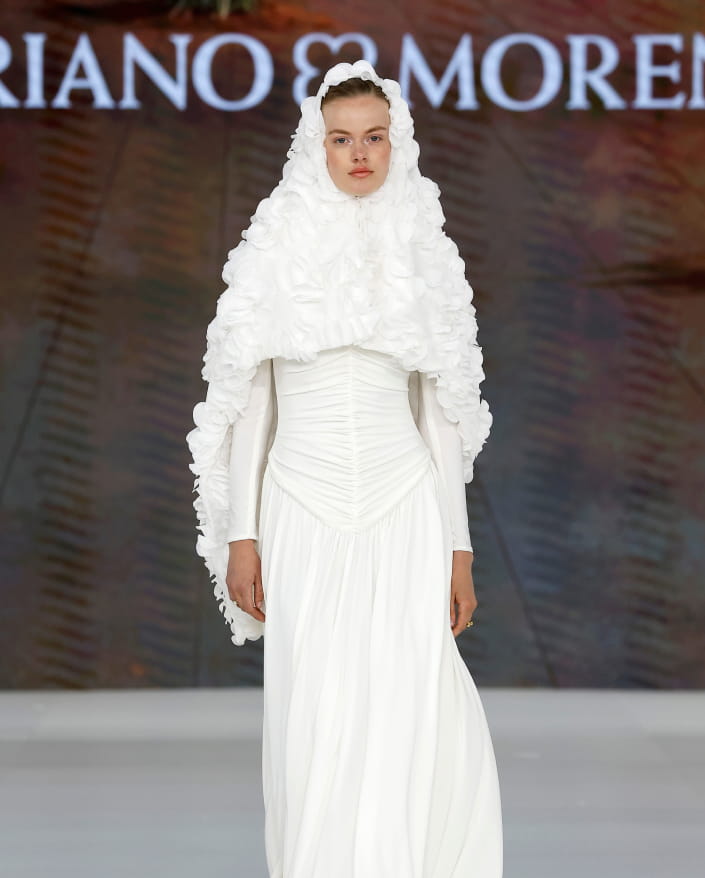
It is not an overt trend, but rather a subtle sensibility that repeatedly appears through small details. Barcelona Bridal Fashion Week 2026 (BBFW26) hints at a mystical, almost performative aesthetic that draws on religious, spiritual and sacred references reinterpreted through fashion.
Ritual whites, veils reminiscent of mantillas, almost saint-like crowns, long gloves and restrained theatricality create looks suspended somewhere between devotion and fantasy.
Marco & María explored this through almost sacred crowns, while Mariano Moreno approached it through more theatrical and performative proposals. There is something of a pop liturgy within this new wave, along with echoes of the LUX universe created by Rosalía, where spirituality, performance and fashion coexist within the same visual narrative.
The wedding dress no longer exists in isolation — it is beginning to engage with real-world fashion.
Craftsmanship is no longer a silent luxury, but a visible protagonist on the runway.
Where to see next season’s bridal trends?
Next season’s collections will be presented at Barcelona Bridal Fashion Week 2027, at Fira de Barcelona’s Montjuïc venue: Fashion Shows on 14–15 April and Trade Show on 16–18 April.
The wedding dress is no longer existing in isolation; it’s beginning to engage in a real dialogue with fashion itself.
Craftsmanship is no longer a quiet luxury — it’s stepping forward to claim its place on the runway.